
Master lawn care for beginners by first identifying your grass type and conducting a soil test to determine nutrient needs. Maintain a healthy yard by mowing according to the one-third rule, watering deeply but infrequently, and applying fertilizer and weed control on a consistent seasonal schedule.
Most homeowners view their lawn as a source of recurring frustration rather than a point of pride. You might find yourself staring at yellow patches or invasive weeds despite spending significant time and money on supposed solutions. This disconnect often stems from a fundamental misunderstanding of what your grass actually requires to thrive. A resilient, vibrant yard is not achieved through excessive chemical applications or daily watering; it is built through precise, science based management. In this guide, we will demystify the essential foundations of turf health. You will learn to analyze your soil composition, master the critical one third mowing rule, and implement a watering schedule that promotes deep root growth. By moving away from guesswork and toward a structured, budget conscious maintenance strategy, you can cultivate a professional quality lawn without the unnecessary waste.
The Foundation of Lawn Care: Understanding Your Soil and Grass Type

Successful lawn care for beginners begins with an honest assessment of your current landscape. Many homeowners waste money by applying products they do not need, simply because they have not identified their specific grass type or soil health. In Ephraim, Utah, we primarily work with cool season grasses. Varieties like Kentucky Bluegrass and Fescues are the standard because they thrive in the mild temperatures of spring and autumn. Unlike warm season grasses like Bermuda or Zoysia, which are more common in the south, our local turf types are built for cold winters but may require strategic care during the peak heat of July.
Before you visit our curated selection of everyday essentials to pick up supplies, you must determine what your soil actually requires. The most common mistake is guessing. Instead of purchasing expensive, unreliable DIY kits, contact your local extension office. In Utah, the USU Extension provides professional soil testing services that are both affordable and highly accurate. They provide a detailed breakdown of your soil's pH and nutrient levels, which is the only way to know if you actually need to add minerals like phosphorus or potassium.
If your soil is already balanced, buying pH adjusters or specific fertilizers is a waste of resources. By starting with data rather than guesswork, you ensure every dollar spent on your yard is an investment rather than an experiment. This practical, budget-aware guide emphasizes that efficiency starts with the right information. Once you know your grass type and soil profile, you can build a maintenance routine that focuses on long term health. You can learn more about our commitment to quality and how we help homeowners find the right tools for any outdoor project.
The One Third Rule: Mowing for Health Instead of Just Aesthetics
Once you have identified your grass type, the most impactful habit you can adopt for lawn care for beginners is the one third rule. This rule states you should never remove more than one third of the grass blade height in a single mowing session. If your grass has grown to three inches, set your mower to leave at least two inches behind. While it may be tempting to cut the lawn very short to increase the time between mows, doing so actively damages the plant.
Cutting too much at once causes significant physiological stress. The grass blade is the primary site for photosynthesis; removing a large portion of it deprives the plant of its ability to produce energy. Furthermore, taller grass provides a vital canopy for the ground below. This shade prevents sunlight from reaching weed seeds, which effectively halts their germination. It also keeps the soil cooler, reducing water evaporation and keeping the root system protected from the intense Utah sun.
The brand or cost of your mower is far less important than the condition and height of the blade. Ensure your mower blades are sharpened at least once per season. A dull blade does not slice the grass; it tears it. These ragged, torn edges quickly turn brown and become entry points for pathogens and disease. Keeping your equipment in top shape is a core part of our about our commitment to quality at Anderson Shops. You do not need the most expensive machine on the market to achieve professional results. You simply need to maintain what you have and respect the biology of the lawn. Setting your deck higher and keeping the metal sharp are two of the most effective, low cost ways to improve your yard’s resilience.
Smart Watering Strategies: Deep and Infrequent is the Goal
Proper mowing technique keeps the grass healthy, but your irrigation habits determine the resilience of the root system underneath. A frequent error in lawn care for beginners is the tendency to water lightly every single day. While this keeps the surface damp, it trains the roots to stay near the soil line. When the Utah summer heat intensifies, these shallow roots cannot reach deeper, cooler moisture, causing the lawn to go dormant or die.
Instead of daily spritzing, aim for deep and infrequent sessions. Your goal is to deliver approximately one inch of water per week, ideally spread across only one or two mornings. This method forces roots to grow downward in search of water, creating a hardy plant that can withstand temperature swings. You do not need expensive moisture meters to monitor this. The tuna can test is a more accessible, functional solution. Place several empty, clean tuna cans around your lawn and run your sprinklers for twenty minutes. Measure the average depth of the water in the cans to calculate exactly how long your system needs to run to reach that one inch mark.
Timing is just as critical as volume. The best window for watering is early morning, generally between 4 AM and 9 AM. During these hours, winds are lower and temperatures are cooler, which maximizes absorption into the soil. Watering in the heat of the day leads to significant loss through evaporation; conversely, watering late at night leaves moisture sitting on the blades for too long, which invites fungal diseases. By using a practical, budget-aware guide to manage your resources, you can maintain a lush yard with our curated selection of everyday essentials without inflating your utility bill.
A Budget Conscious Approach to Fertilizing and Weeding
Effective lawn care for beginners focuses on nutrient management and weed prevention without overspending on excessive chemical applications. Timing is the most critical factor in fertilization. For the cool season grasses common in Ephraim, the sweet spots for feeding are late spring and early fall. Many homeowners wonder if October is too late to fertilize. In our climate, October is actually one of the best times to apply a slow release nitrogen fertilizer. This late season feeding strengthens the root system and helps the grass store energy for a faster green up in the spring.
Conversely, you should never fertilize when temperatures reach 100 degrees. High heat puts the lawn in a state of stress; adding fertilizer at this time can lead to chemical burns that cause permanent damage. It is more effective to wait for a cooler window when the grass is actively growing and can actually absorb the nutrients. Waiting for the right weather ensures you are not wasting product that the lawn cannot use.
Regarding weed management, the most affordable and sustainable strategy is a health first approach. A thick, dense turf is the most effective weed preventer available. When your grass is robust, it leaves no room for sunlight or space for weed seeds to germinate. If you do see weeds appearing, resist the urge to buy expensive blanket sprays that cover the entire yard. Instead, practice spot treating. Using a simple hand tool or a targeted spray for individual weeds saves money, reduces chemical runoff, and preserves the health of the surrounding grass. This targeted method aligns with our about our commitment to quality by prioritizing functional solutions over excess. By purchasing only what you need from a curated selection of everyday essentials, you can maintain a clean yard on a modest budget. Managing your lawn this way ensures you follow a practical, budget-aware guide that values long term stability over quick, expensive fixes.
Common Lawn Care Mistakes Beginners Make

Moving from strategy to execution requires avoiding the "more is better" fallacy that often plagues lawn care for beginners. Many homeowners assume that if a little fertilizer is good, a lot must be better; however, over-fertilizing leads to nitrogen burn and excessive top growth that the root system cannot support. Similarly, overwatering creates a damp environment that invites pests and rot rather than resilience.
Timing also dictates success. The worst time to mow is during the peak heat of a Utah afternoon or when the grass is heavy with dew. Mowing wet grass results in an uneven cut and promotes the spread of disease, while mowing in 90 degree heat adds unnecessary physiological stress to the plant.
Finally, beginners often waste resources by treating symptoms instead of causes. A brown spot in the yard is not always a sign of thirst. Before you increase your water bill, investigate the source. The patch could be caused by a fungal infection, a localized grub infestation, or even a buried rock reflecting heat toward the surface. By diagnosing the root issue before applying a fix, you adhere to a practical, budget-aware guide that prevents wasted effort. At Anderson Shops, about our commitment to quality means helping you identify these nuances so your maintenance remains efficient and effective.
Essential Gear: The Only Tools You Truly Need
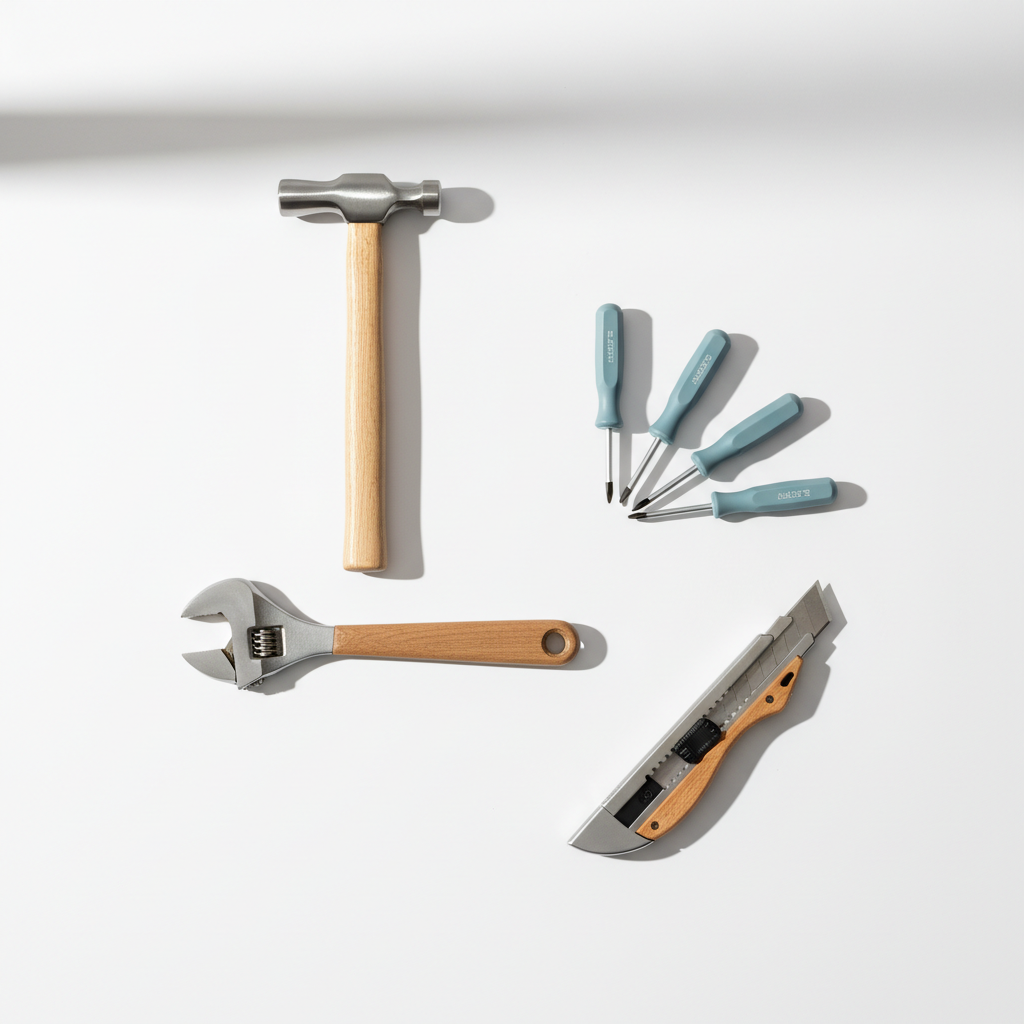
Avoiding common maintenance errors requires having the right equipment on hand. For effective lawn care for beginners, you do not need a shed full of motorized gadgets. Instead, focus on a curated selection of everyday essentials that prioritize durability and function over unnecessary features. A reliable mower with an adjustable deck is your most important investment. Choose a model known for longevity so you can sharpen the blades season after season rather than replacing the entire unit when it dulls.
To manage nutrition and hydration, you need a basic broadcast spreader and a high quality garden hose. Cheap hoses often kink and crack under the intense Utah sun, while a sturdy, reinforced hose ensures consistent water delivery for the deep watering sessions your grass requires. A steel tine rake is also vital for clearing debris without damaging the turf canopy. For weed management, a simple hand weeder is often more precise and significantly cheaper than complex chemical spray systems. This focus on long term value and functional utility reflects about our commitment to quality. By following this practical, budget-aware guide, you build a tool kit that works as hard as you do.
A Simple Month by Month Maintenance Checklist
A practical, budget-aware guide simplifies lawn care for beginners into a predictable seasonal rhythm.
Spring: Clear winter debris with a steel rake and conduct a soil test. Apply pre-emergent weed control if necessary once soil temperatures reach 55 degrees.
Summer: Shift to deep, infrequent watering. Set your mower to its highest deck setting to shade the soil and prevent moisture loss.
Fall: Aerate the soil to relieve compaction. Apply a slow-release nitrogen fertilizer in October to build root strength for winter dormancy.
Winter: Focus on equipment longevity. Clean your tools and sharpen mower blades using a curated selection of everyday essentials.
This high-return schedule reflects about our commitment to quality by ensuring your effort is always timed for maximum impact.